
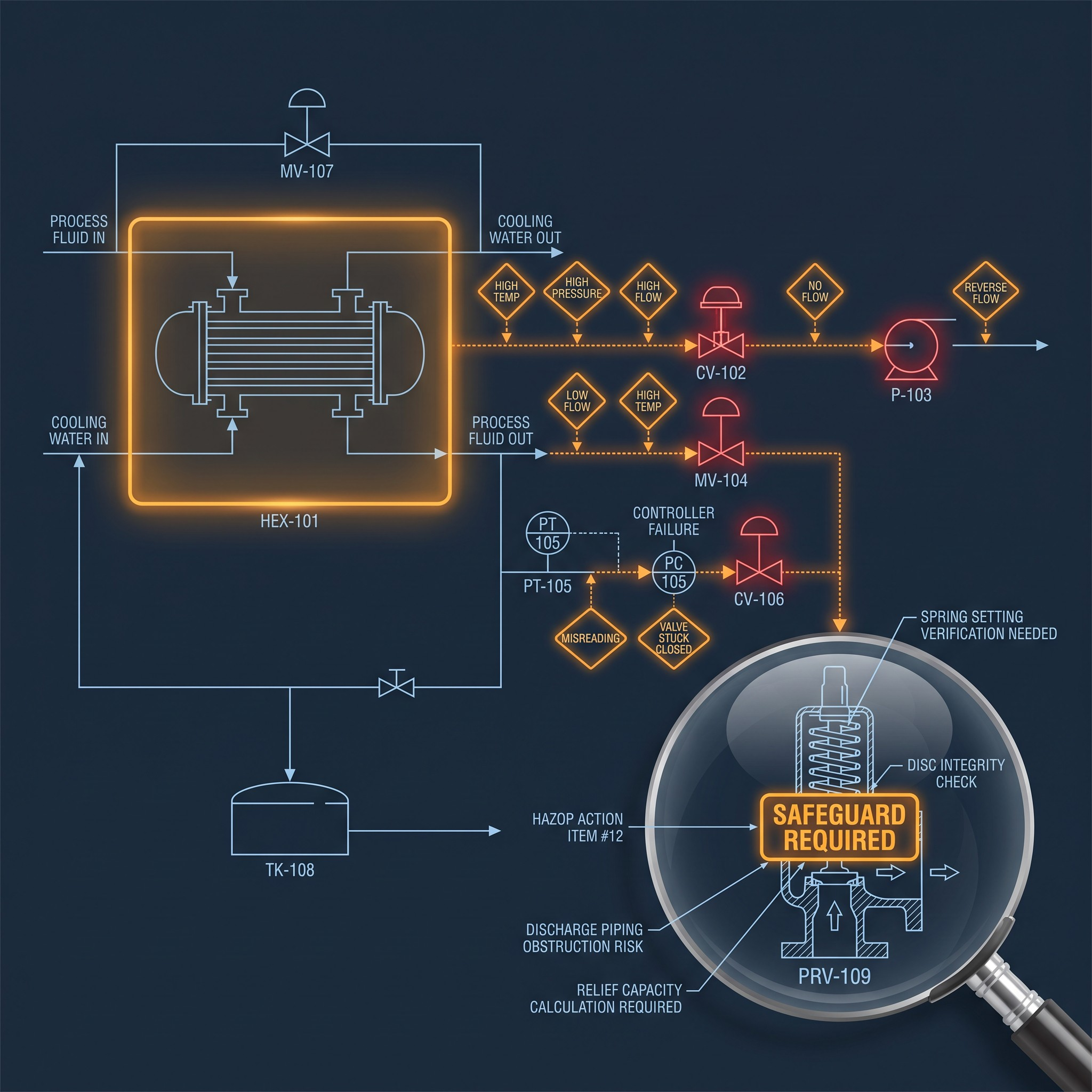
In oil and gas, petrochemical, chemical and pharmaceutical operations, understanding how process deviations can lead to catastrophic failures is essential for operational integrity and personnel safety. One of the most globally recognised and proactive frameworks for this is the Hazard and Operability Study, or HAZOP.
What is HAZOP?
A HAZOP is a systematic, structured and collaborative technique used to find deviations in industrial processes. For each deviation it defines the potential causes, consequences and safeguards, so that hazards, operational problems and process weaknesses are detected before they cause harm. It was originally developed in the UK in the 1960s. HAZOP shifts safety management from a reactive, wait-and-see attitude to the proactive identification of risks before accidents occur.
The two components of risk
A HAZOP defines risk through two measures:
- Probability. The likelihood, or uncertainty, of a future event occurring.
- Consequence. The severity of the outcome, such as fatalities, asset damage or environmental impact.
The six-step HAZOP methodology
- 1. Identify. Apply deviations (for example High Pressure) to find potential causes.
- 2. Consequences. Determine the worst-case outcome with no safeguards in place.
- 3. Probability. Reach a team consensus on how likely the event is.
- 4. Evaluate. Plot the risk on a matrix to check whether it is acceptable.
- 5. Safeguards. Identify existing protections such as alarms and pressure safety valves (PSVs).
- 6. Decision. Accept the risk or recommend further safety actions.
Why HAZOP is important
- Multidisciplinary insight. It combines engineering and operations perspectives through expert facilitation.
- Prevents major accidents. It uncovers hidden hazards in complex process designs.
- Improves operational efficiency. It finds not only safety hazards but also operability problems that cause downtime.
- Creates a clear action trail. Auditable recommendations lead to lasting safety improvements.
- Supports compliance and reliability. It protects employees, equipment and the environment and reduces downtime and financial loss.
When should a HAZOP be conducted?
- During facility design and operational planning.
- Before commissioning and start-up.
- Before high-risk projects or major modifications.
- As part of regulatory audits or corporate safety requirements.
- Regularly through the operating life as part of continuous improvement.
How EnTech can help
EnTech Engineering Solutions provides expert facilitation of multidisciplinary HAZOP teams, systematic identification of process deviations, risk-based evaluation using industry-standard matrices, and practical, implementable safety recommendations, with methodologies tailored to your process. Contact us at info@EnTech-Solution.com.