
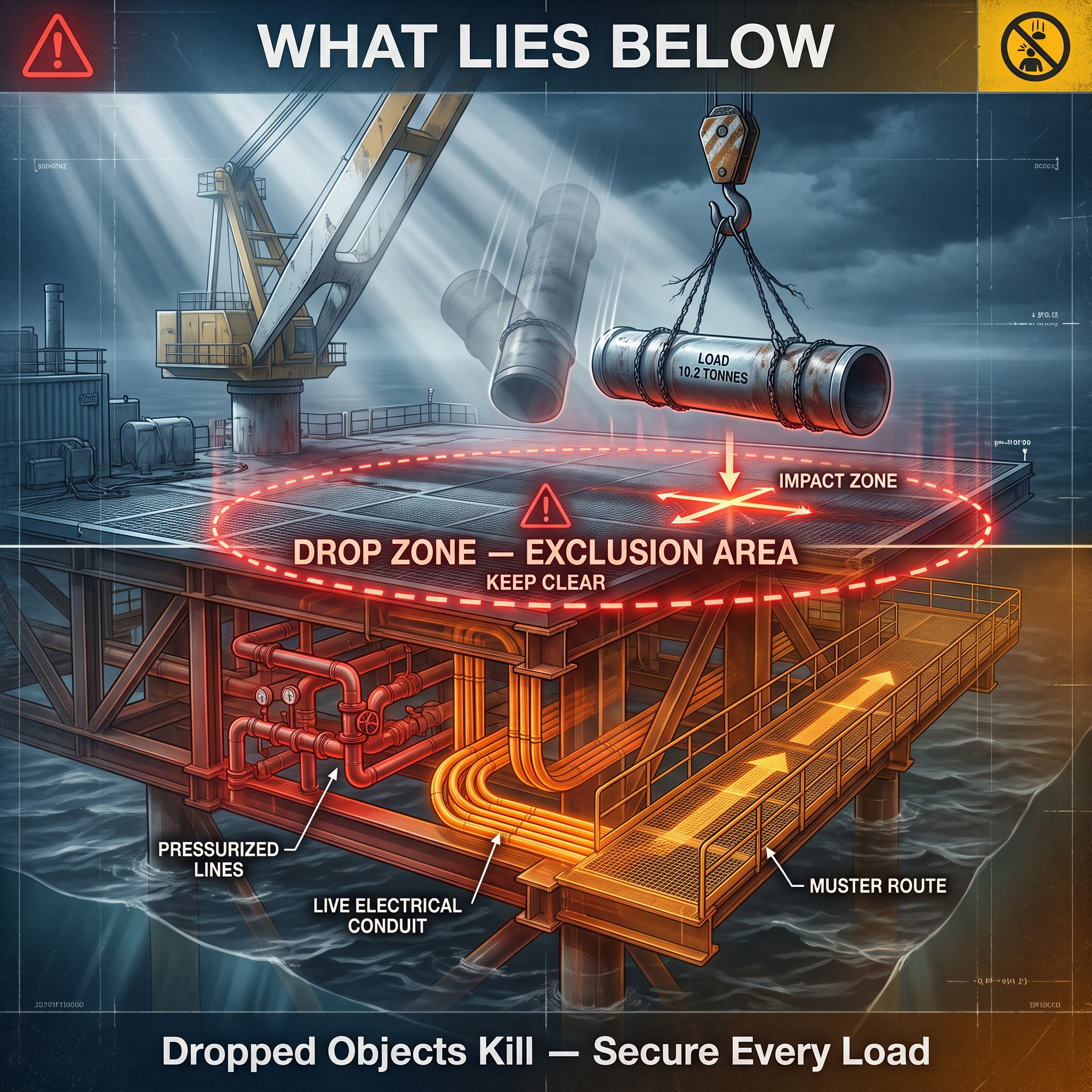
In oil and gas, petrochemical, chemical and power industries, lifting and mechanical handling are significant safety challenges that go far beyond routine procedures and checklists. A structured and defensible way to manage these risks is the Dropped Object Risk Study.
What is a dropped object study?
It is a safety assessment methodology that evaluates the risks from falling objects and swinging loads during lifting operations in onshore and offshore facilities. It ensures the risks are reduced to a tolerable level by systematically assessing:
- Drop scenarios and potential impact zones.
- The frequency and probability of lifting activities.
- Impact consequences to people, assets and the environment.
Why it is important
- It demonstrates compliance with international safety standards and best practice.
- It identifies critical drop zones and vulnerable equipment.
- It provides a defensible basis for engineering and operational safeguards.
- It reduces the risk of injury, fatality and asset damage.
- It builds the confidence of operators, stakeholders and regulators.
When should it be performed?
- During design and layout development of onshore and offshore facilities.
- As part of major hazard and lifting risk assessments.
- During safety case preparation and submission.
- Before critical lifting campaigns and heavy lifts.
- During operational changes and Management of Change (MoC).
A multidisciplinary team is essential to keep the evaluation objective, realistic and robust.
What the study delivers
- Identification of lifting activities and potential drop zones.
- Assessment of dropped object probability and frequency.
- Impact energy and consequence evaluation.
- Identification of engineering and operational risk reduction measures.
- Clear, auditable documentation aligned with regulatory and industry expectations.
How EnTech can help
For dropped object studies and process safety support, contact us at info@EnTech-Solution.com.